
Some of the decorative signs I started painting with dry brushing techniques and stamping rollers in the previous post are ready for stenciling! I am going to do two different techniques, a dry brush stencil and a foil transfer. See the previous posts in this series: Base Coats and Adding Texture.
On two signs I’m going to dry brush stencil the words “Love” and “Faith.”
 You will need:
Word Stencils (Stencil Garden #877)
Stencil Brushes
Paint
Tape
Rulers
Dry Brush Technique:
Start by centering your stencil on your work. Using two quilters rulers which are see-through, one on each side, can help center the stencil easily by allowing you to just move the stencil until the distance from each side is the same. Once you’re happy with the centering left and right, center from top to bottom and then tape down the stencil.
 Wet your stencil brush with paint, then swirl on to a foam plate or palette, then dry it again on paper towel. It might seem like you’re taking all the paint off the brush, but this is what you want to keep the sharp lines of your stencil. Use this dry brush to stipple or pounce the color into the void of your stencil. Stencil brushes are round with a blunt cut and have stiff bristles which is necessary for traditional stenciling technique.
You can choose to pounce on the color or swirl it on, but a light color over dark surface will work better with the pounce instead of swirl. You can check on your coverage by lifting up a corner of the stencil, making sure to hold the stencil in place with one hand. Chalk paints will dry lighter, so keep that in mind, but also you can’t keep going back over it or you’ll start to remove some of the paint. You will need to let it dry before doing a second coat.

I used Modern Masters Silver Metallic Paint for the word Faith. I used the same technique as with the word Love, putting a bit of paint on my plate and swirling it into the brush and then wiping it on a paper towel before pouncing it into the stencil areas.

Now these signs just need some time to dry, then I’ll put on a finish coat to protect my work.

On a third sign I’m going to put the word “Hope” on it with decorative foil. Hope is always something good to have! This board was first finished with a diamond pattern and stamping roller which creates a really great textured background.
You will need:
Stencils (Stencil Garden #877)
Foil Adhesive
Foil
Stencil Brush
Scissors
Tip: My ArtsSyVille Foil Adhesive is simple to clean up, water soluble. Your stencil will get some adhesive on it during this process, but it will wash off easily.
 Start by centering your stencil and taping it down. Using the foil adhesive and a stencil brush, pounce on the adhesive through the stencil. Keep the brush rather dry so the adhesive will not bleed under the stencil. Stipple the foil adhesive over the stencil twice to make sure it has good coverage.

The foil adhesive will wash off with water, don’t worry that you’re ruining your stencil!
Remove stencil carefully, and give the adhesive time to dry. Don’t rush to transfer. With the foil adhesive you aren’t limited to a window of time. You can leave it for days and even weeks before transferring the foil!
 Once your adhesive has had enough time to dry, use scissors to cut your foil to size. With the metallization on the back, lay the foil over your project. Using a soft cloth, rub the foil and then pull back just a part to take a peek at your work.
 If you want to transfer a lot of foil, use a scrubber brush. You can control how much foil is transferred by varying the pressure you use on the brush. Once you’re happy with the amount of transfer, peel off the film. Top coats are a must when foils have been used to protect the finish and cover any adhesive that hasn’t adhered to foil.

I hope you have enjoyed this series of projects! As always, we love to see what you’ve made with metallic foils and stamping rollers!

Decorative Signs Project Series:
1. Base Coats
2. Adding Texture
3. Stenciling Techniques

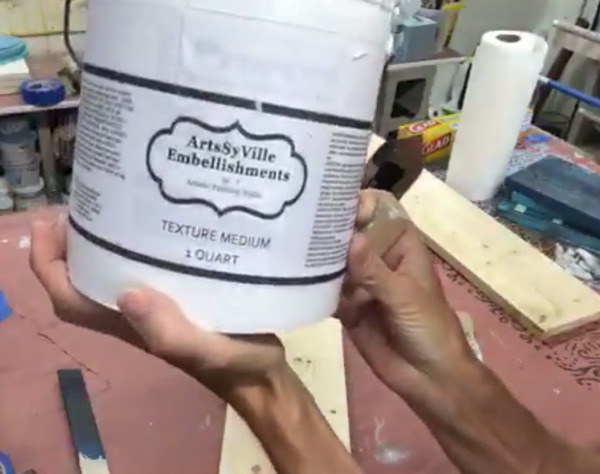
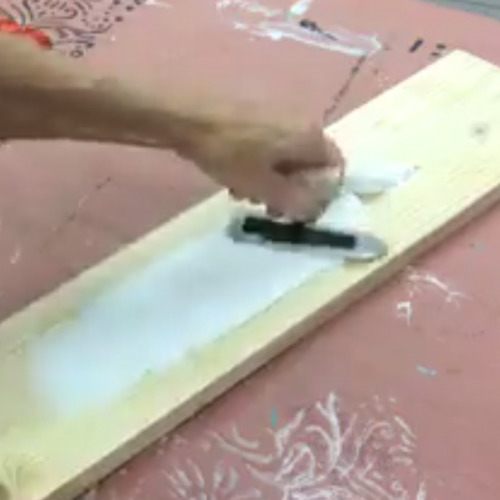 Once you have the texture medium covering your board, use your trowel to remove excess product to get it down smooth. Clean up the edges, I just use my finger to do this, and then you’re ready to roll.
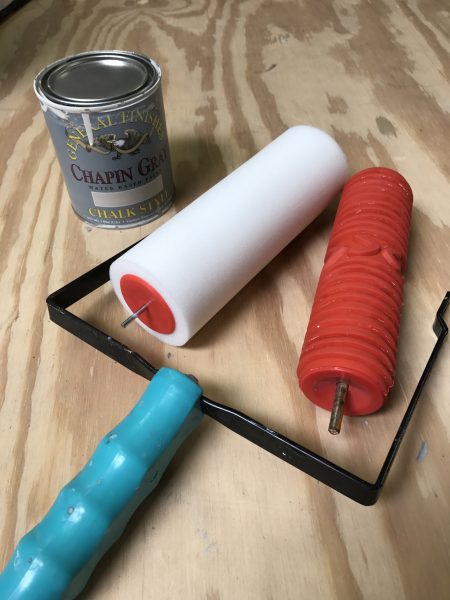
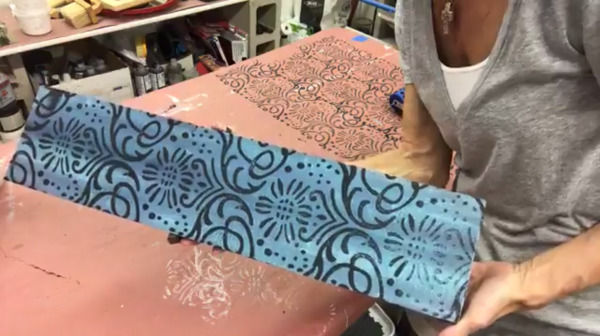
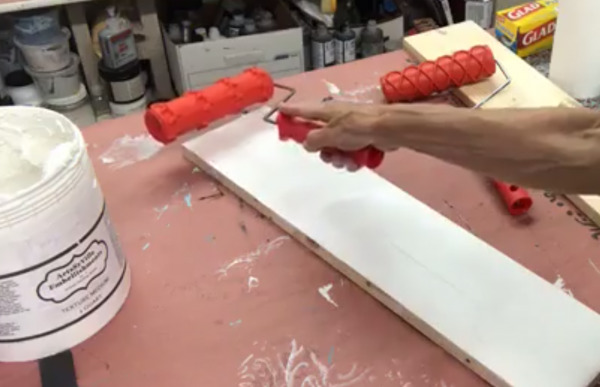 I’m using the “Between the Vines” roller on one of my boards. Just roll your chosen stamping roller down the project, slow and steady. If you aren’t happy with the first try, trowel it out and do it again! I centered three of the vines on the “Between the Vines” stamp across the length of the board and then rolled it again through the width to create a box pattern. I just eyeballed the spacing, but I think it turned out pretty great!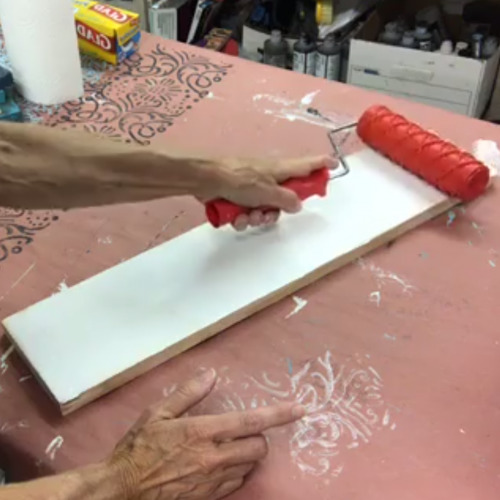
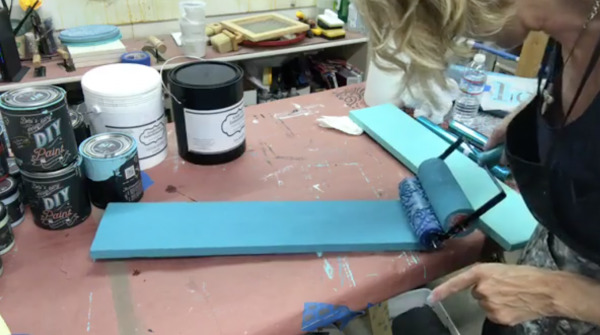 When the texture medium on the board with the diamond shape was dry and sanded down, I painted it, then I added a little more interest with a stamping roller. I used Debi’s DIY Paints in Seaglass with a Chrysanthemum pattern roller.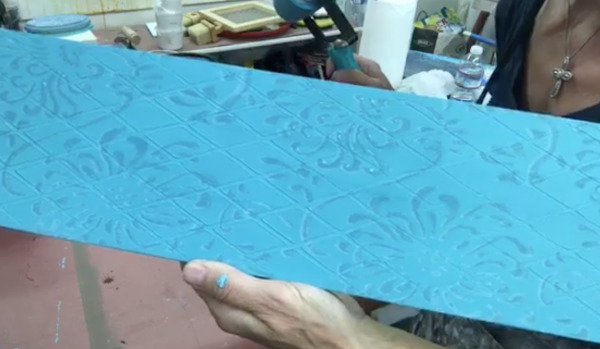
 Cover the edges and front of your board in a single color. I like using Art Wash brushes for this because they pull and push the paint easily, allowing the finish to come together smoothly, even over the uneven surface of the wood. Allow this coat of paint to dry. The two base colors I have chosen are Hey Sailor and Mermaid Tail.
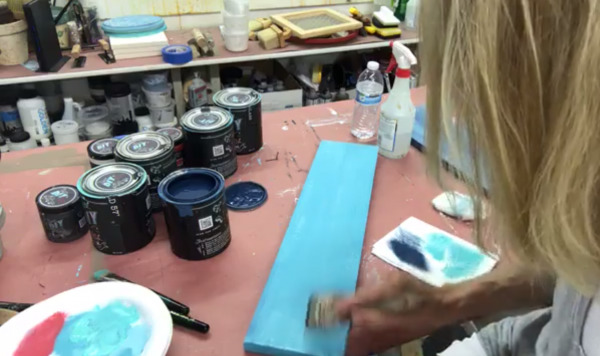 Start by dipping your brush in the paint and then swirl the paint on to a palette or foam plate. Really work it in. Then rub the brush on a paper towel. You want to make sure it’s dry. Now you can start working the paint over the surface of your piece. Dry brushing is just meant to “highlight” the surface and create depth/texture. I’ve used a combination of three colors on top of the background during this dry brushing stage. I chose colors in the blue family, but also a warm red, which when mixed with the background color creates a nice purple tone.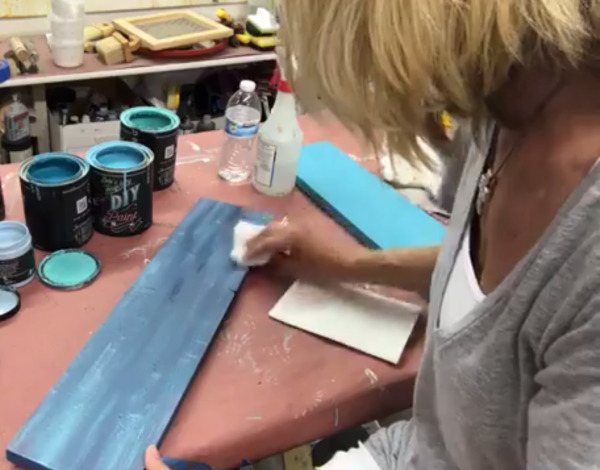
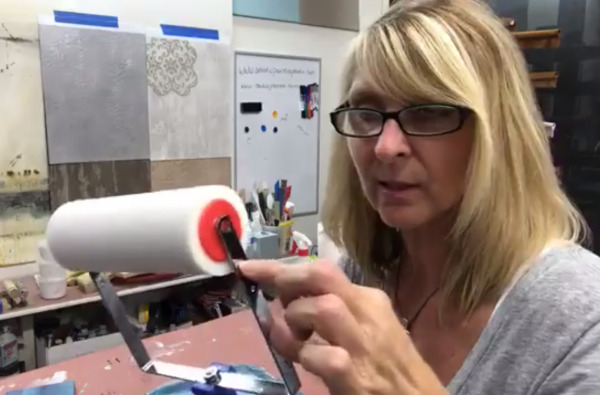 I keep the foam roller in the outermost holes while loading, moving it back when I’m ready to add the pattern roller. When your foam roller is ready to go, move it to the inner set of holes so your pattern stamp can be placed on the outside. Give the pattern roller a few rolls on a clean sheet of paper to transfer the paint to the design. Now you’re ready to carefully roll your design across the plank. I chose colors that create a tone-on-tone feel for the background of my signs. Nothing with too much contrast so it doesn’t take away from the words which I will stencil on later.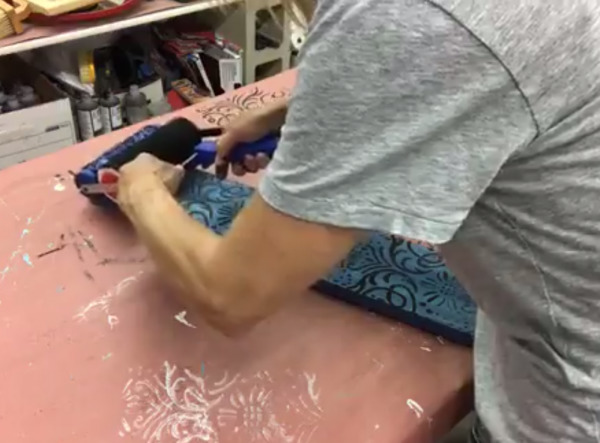
 Start with ArtsSyVille Foil Adhesive and coat your pumpkin while holding the stem. I prefer using an Art Wash Brush for this step. You want an even coat, not too thick, but not too thin. The foil adhesive will go on with a milky white color, but it will dry completely clear. I set my pumpkin on top of an open bucket to allow it to dry so the least amount of surface was touching the bucket. You want it to dry to a firm tack, this could take anywhere from 30 minutes to a couple hours, depending on the humidity where you live. You can even allow it to dry overnight, there’s no risk of waiting too long. Foil Adhesive is water soluble, very easy clean up.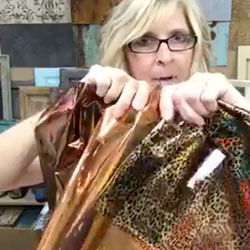
 Instead of laying the foil on the surface of the pumpkin, I bunched up the foil, being sure that all the film is on the inside so no film will adhere to the pumpkin, and pounced it on the surface of the pumpkin. This gives the pumpkin a nice textured appearance. As you’re doing this and the foil is being pulled off the film, open the bunched up foil and find a new section to use. You might need to use a couple pieces of foil. Once you’ve pounced the foil around the whole pumpkin, switch to the next color. This method is not going to give complete coverage, but it will give a great dappled texture.

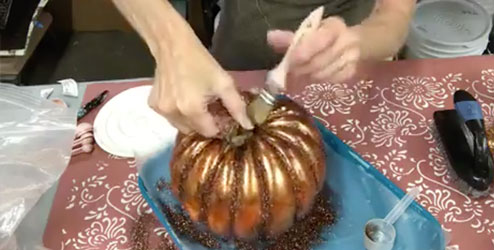

 On the second pumpkin I used Seafoam and Rose Gold foils. I cut pieces of the Seafoam foil, approximately 8” lenghts. I needed five of these pieces to cover my medium sized pumpkin.